
.webp)
Have you ever watched a corporate event video that failed to capture the audience's attention? Most corporate films miss the mark because they begin with weak storytelling instead of a strong script.
A well-written script lays the foundation for every successful short film. Once the script works, production becomes much easier. When you need to grab an audience's attention at a big conference or annual general meeting, standard slide decks just do not cut it anymore.
Over the last twenty years working on high-stakes audio-visual productions, we have learned that a well-crafted short film changes the entire energy of the space. It builds a real emotional connection and breaks up the monotony of speeches.
In this guide, we will walk through how you can plan and produce a corporate short film that really resonates with your audience.

An engaging short film clearly conveys your main message to the audience and builds an emotional connection with the room.
It is challenging to keep an audience tuned in during a corporate event. When presentations get weighed down by heavy data, lengthy speeches, or dense slide decks, people naturally start checking out.
Having worked on large conferences and AGMs, we know people remember a good story long after they forget a spreadsheet. Blending a clear message with strong visuals gives your audience something real to hold onto, which reinforces the whole point of your event.
A successful corporate short film starts with careful planning. Following a clear step-by-step process helps you develop a stronger story, avoid costly mistakes, and keep the project on schedule from planning through to production.
First of all, you need to figure out what you actually want people to feel or understand by the time the credits roll.
For instance, if your company is launching a brand new internal scheduling app, your goal might be showing how team members finally book meeting rooms without endless email chains.
Or, if your company is celebrating its tenth anniversary, your goal can be walking the room through your biggest hurdles and triumphs so everyone feels proud of the journey.
Without a single focus, videos tend to cover too much and end up without leaving any memorable impact on the audience. It helps to sit down with your team first and define the core message in one simple sentence.
The next step is mapping out how your story unfolds from beginning to end. Instead of jumping straight into corporate wins, you can start with the everyday frustration your audience already knows too well.
For instance, you might describe someone staring at a crowded calendar, struggling just to book a meeting room. From there, introduce your solution as the turning point that fixes the chaos, and finish by showing how much easier life gets once the problem is solved.
When you keep your plot line straightforward with a clear beginning, middle, and end, nobody in the room gets lost along the way.
Next comes the scriptwriting stage. Many people try to squeeze too much dialogue into every scene, which makes the story harder to follow.
Here is how to write a script for a short film:
Here is a quick look at how you can map out a corporate film. You can tweak the visuals and ideas to fit your own event and audience:
Scene 1 – Opening
Scene 2 – The Challenge or Opportunity
Scene 3 – The Solution or Achievement
Scene 4 – Closing
Now it is time to choose your cast. Deciding whether to hire actors or use your own staff is a big call. Think about this early because it shapes your budget and schedule.
If you are dealing with a heavy emotional storyline or a polished brand film for major clients, hiring professional actors is usually worth it. Experts know how to hit their marks and deliver lines naturally on the first take.
On the other side, if you are putting together an internal culture piece, it may be better to choose your own team. They understand your workplace culture and can add a genuine charm that actors cannot fake.
When telling employee stories, it is also worth thinking about representation and accessibility so everyone feels included. Our guide to inclusion in technology explores how inclusive communication helps create better experiences across the workplace.
After finalising your cast, try to get all your logistics sorted out well before shooting day actually rolls around.
You should book your locations and check in with your cast first. Then double-check your lighting and audio equipment before filming. This simple step helps everyone feel prepared and prevents technical issues on the day.
Next comes the main event when you actually shoot your corporate short film. Following the storyboard works wonders, but it really helps to leave a little room to catch those unplanned moments like someone laughing between takes, an unexpected natural reaction, or a genuine unscripted smile.
Cast members often sound more natural when you spend a few minutes helping them relax before filming.
Also, try to keep an eye on lighting changes and weird background noises because nothing ruins a great visual shot faster than bad audio.
The final step is editing and finalising your film. It helps to ruthlessly trim out any scenes that drag or stall the momentum so the story keeps moving. Also, balance out the audio levels and layer in some subtle background music to set the exact right mood.
Before calling it a wrap, we recommend exporting a backup file in top resolution so the film plays smoothly when it hits the big screen.
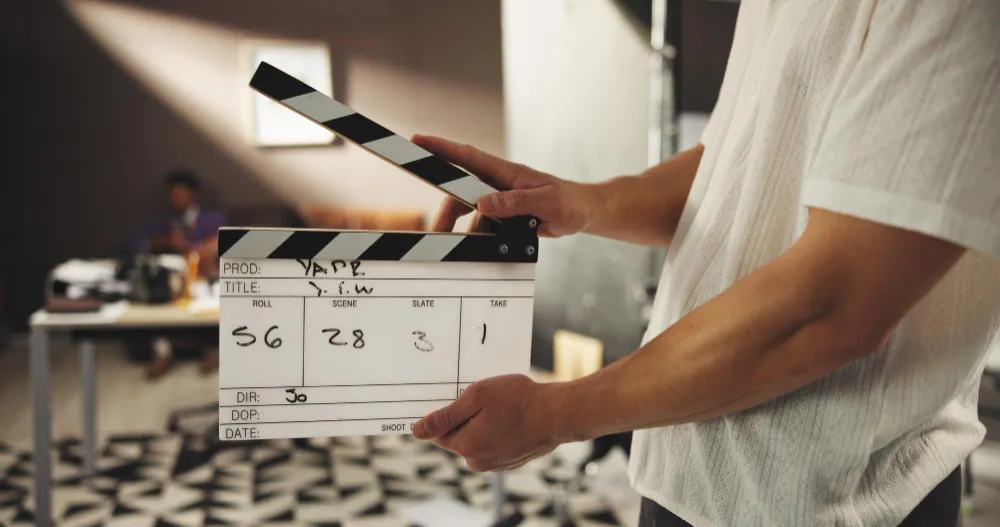
We usually suggest keeping it right between two and five minutes. Short duration keeps your storytelling sharp and holds everyone's attention all the way through.
Things can get messy if you run into a few mistakes when producing a short film:
Note: If your event includes a virtual or hybrid component, you can read our guide on Top Tips to Running a Successful AGM: Remote Considerations to reduce the risk of technical mistakes.
Honestly, pricing depends entirely on what you want to put on screen. If you just want a quick internal video shot around the office, you can pull it off for a few thousand bucks.
But if you are after a cinematic brand piece with hired actors, multiple shooting spots, and pro lighting, costs start adding up quickly.
Figuring out what you can realistically spend right at the start stops you from planning something that ends up out of reach. It also helps your production team recommend the right approach without compromising your key objectives.
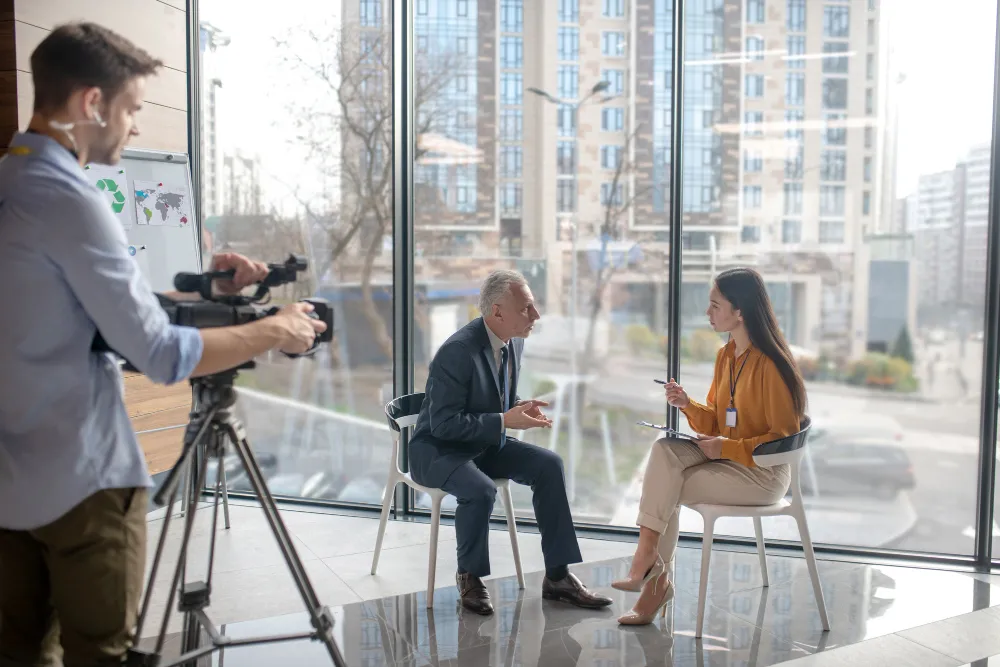
When you have a massive room full of stakeholders watching your event, a technical glitch is the last thing you want to deal with. Bringing in a professional crew takes that weight off your shoulders.
You bring the message, and their team helps bring it to life through careful planning. They show up with broadcast-grade cameras, sound gear, and people who know how to run a set without stepping on each other's toes.
We ran into this exact situation recently when a major financial group needed help with a multi-site AGM broadcast. They had zero room for error with their live streams. Our crew stepped in, tightened up the script, and set up redundant backup feeds so nothing could crash. The event went off smoothly, and the leadership team could actually relax.
Putting together a short film for a corporate event takes patience and a clear vision. When you stick to a single strong message, write with visual scenes in mind, and avoid basic mistakes, you can build something people actually enjoy watching and remember.
If you want professional help with the process, our team at Corporate Technology Services has you covered. We can work right alongside you to plan and produce a short film that hits your event goals and leaves a great impression. Feel free to reach out whenever you are ready to talk through your next project.
If the time is short, you can skip the grand cinematic ideas and shoot something simple right in your own workspace using staff members who know the business. It also helps to cut down your script so you only have a few short scenes to film.
Yes, you can break it up into smaller pieces for your company newsletters and post clips on internal chat channels. You can also post highlights on social media to extend the value of the time and money you’ve already spent.
It’s helpful to keep the story focused on real workplace challenges and everyday human moments instead of just listing product features. When people spot their own daily wins and struggles up on screen, they connect with the message naturally.
.webp)
.webp)


_AU_English_2026_Certification_Badge.png)
.jpg)


.jpg)

.jpg)


